About All Tours Full Day ToursSafari ToursHalf Day ToursFrom Port Elizabeth Directions Hours & Fees Guides
Find Tours 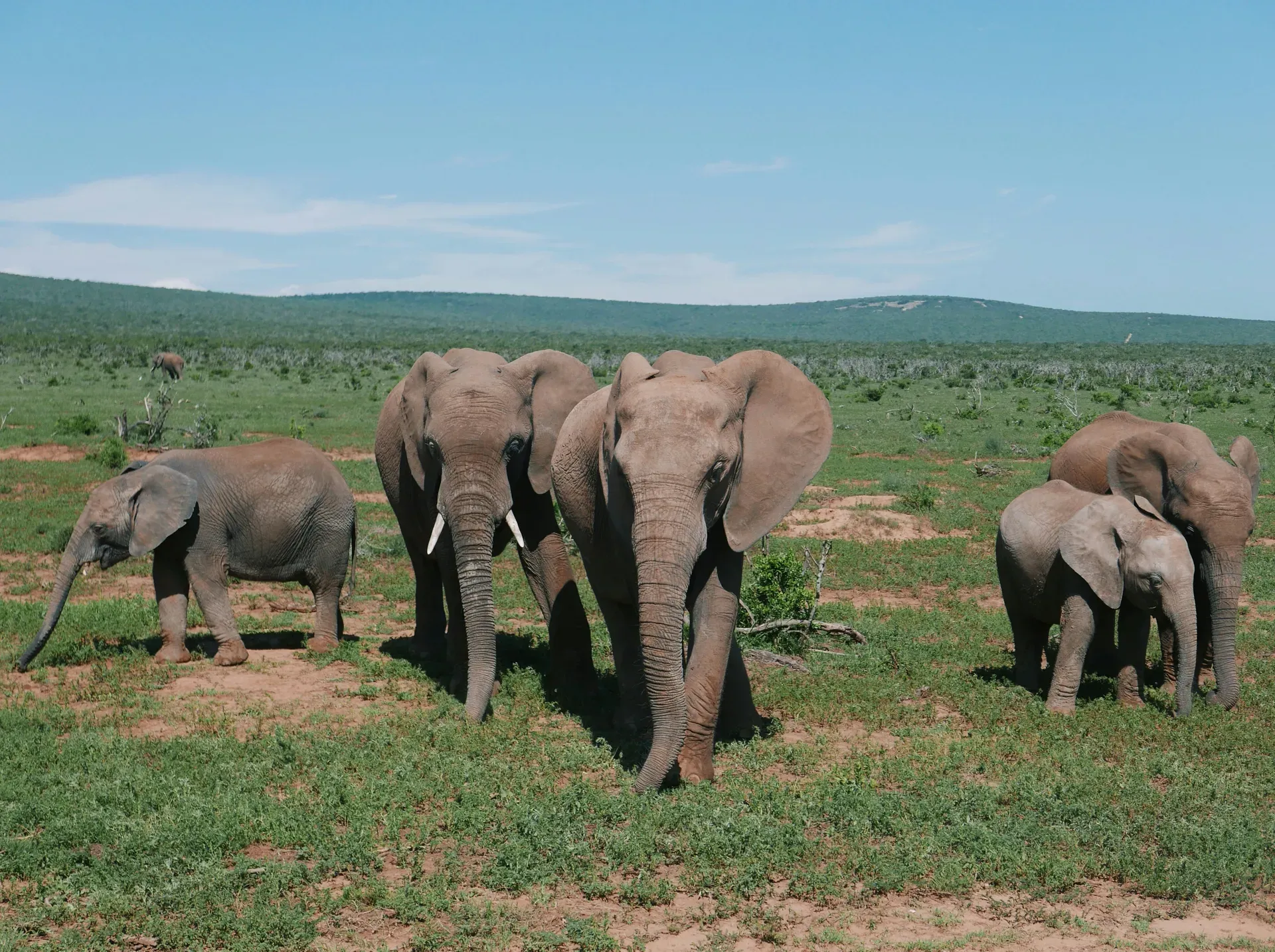
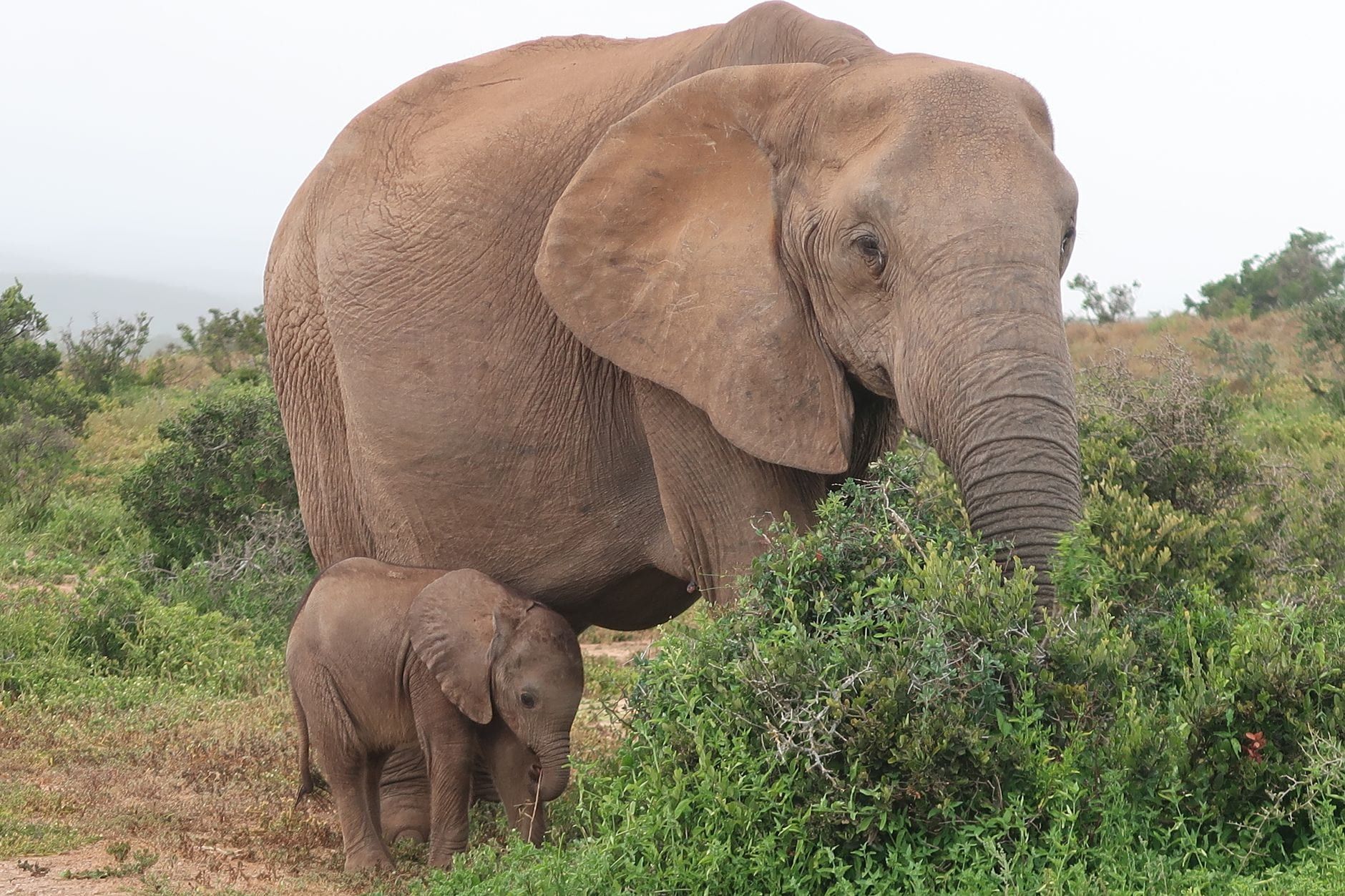
Just 72 km from Gqeberha, more than 600 elephants roam dense spekboom bushveld in a malaria-free Big Five reserve — and the marine section adds great white sharks and southern right whales for a 'Big 7'. Wait an hour at Hapoor Dam on a warm morning and you can count dozens of them drinking at once.
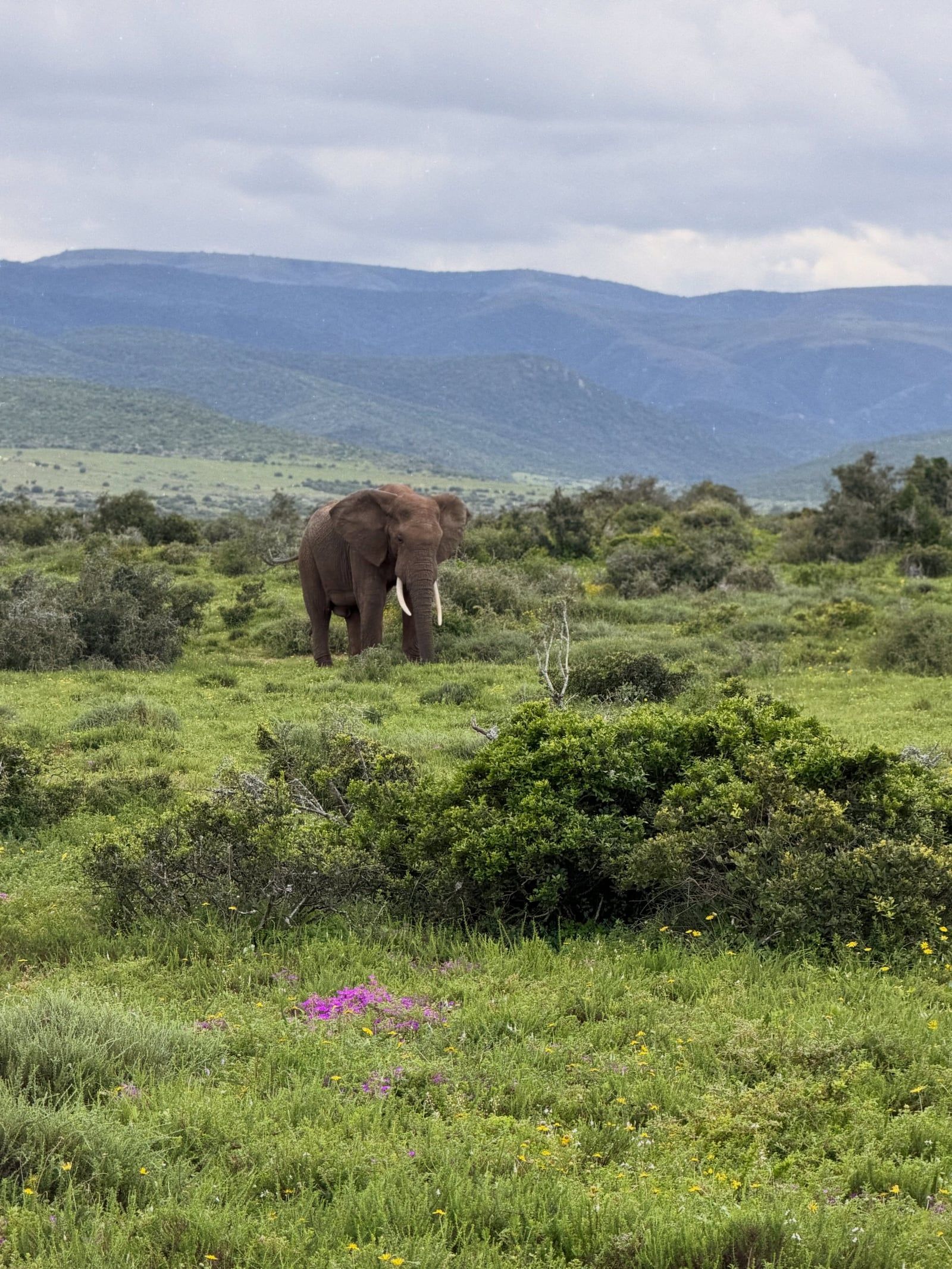
Find Guided ToursAddo Elephant National Park sits 72 km north-east of Gqeberha in South Africa's Eastern Cape, a malaria-free Big Five reserve where more than 600 elephants roam dense valley bushveld. You can drive the loops yourself in an ordinary sedan, or book a guided safari. Either way, the elephants are the draw: breeding herds gather at waterholes like Hapoor Dam, sometimes dozens at a time on a warm afternoon.
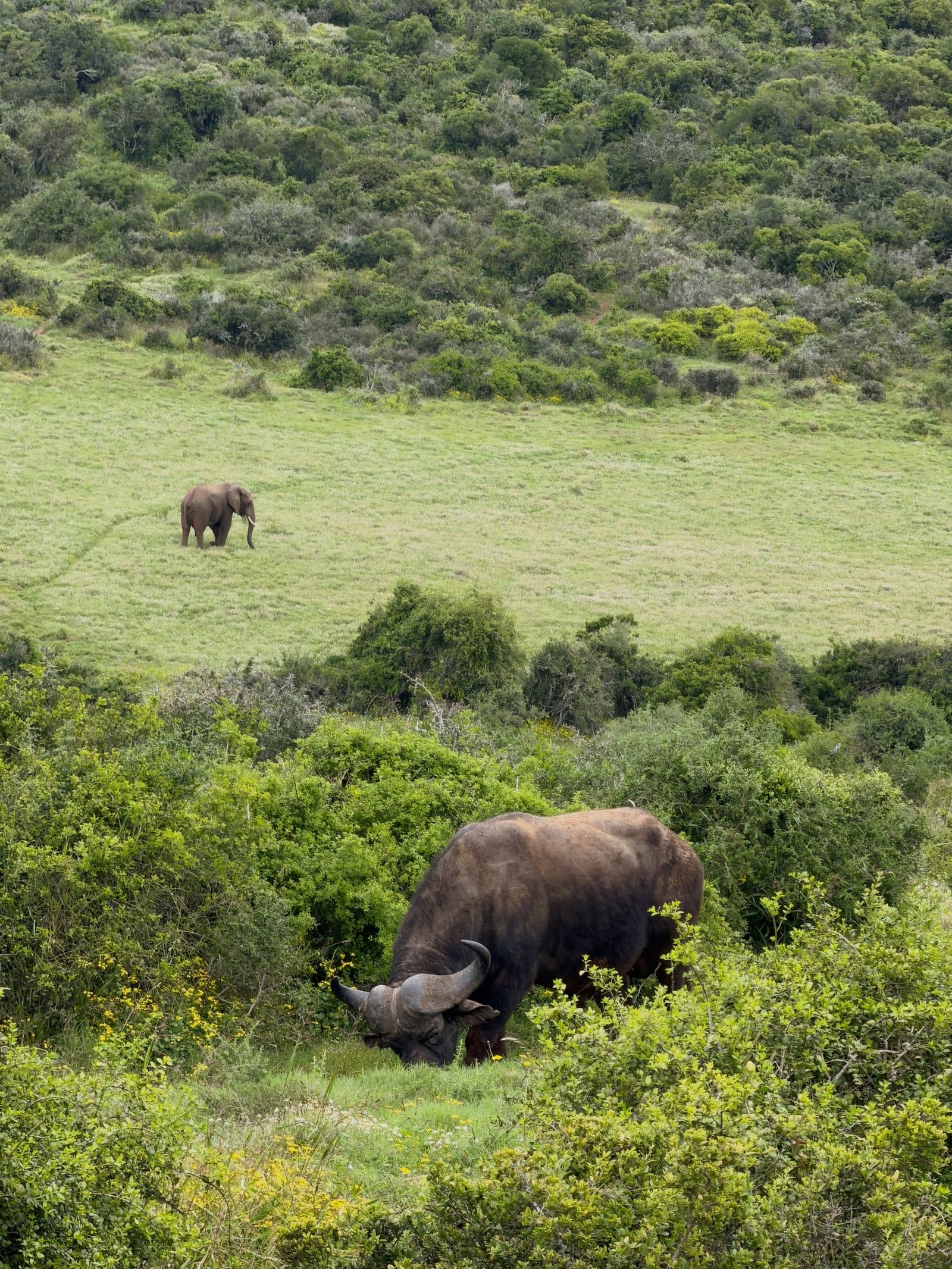
What sets Addo apart is the "Big 7." Alongside lion, leopard, buffalo and rhino, the park's marine protected area around St Croix and Bird Islands brings great white sharks and seasonal southern right whales into the same conservation system. Few parks on earth manage elephants and great whites under one banner. The park also shelters one of the last populations of the flightless dung beetle, a hefty insect that rolls dung balls up to 50 times its body weight across the gravel roads — drive around them. Birders get a list of over 400 species.
The park began as a rescue operation. Between June 1919 and August 1920, after farmer complaints, Major P. J. Pretorius shot roughly 120 of the Eastern Cape's last elephants, cutting the population from about 130 to 16. Addo was proclaimed on 1 August 1931 to protect the 11 that survived, across a mere 2,270 hectares.
Protection worked. Successive expansions added the Zuurberg Mountains, Darlington Dam, the Woody Cape coast and the marine section, growing the park to roughly 1,640 km² — the third-largest national park in South Africa — and spanning about five biomes, from Karoo scrub to coastal dune field to open ocean.
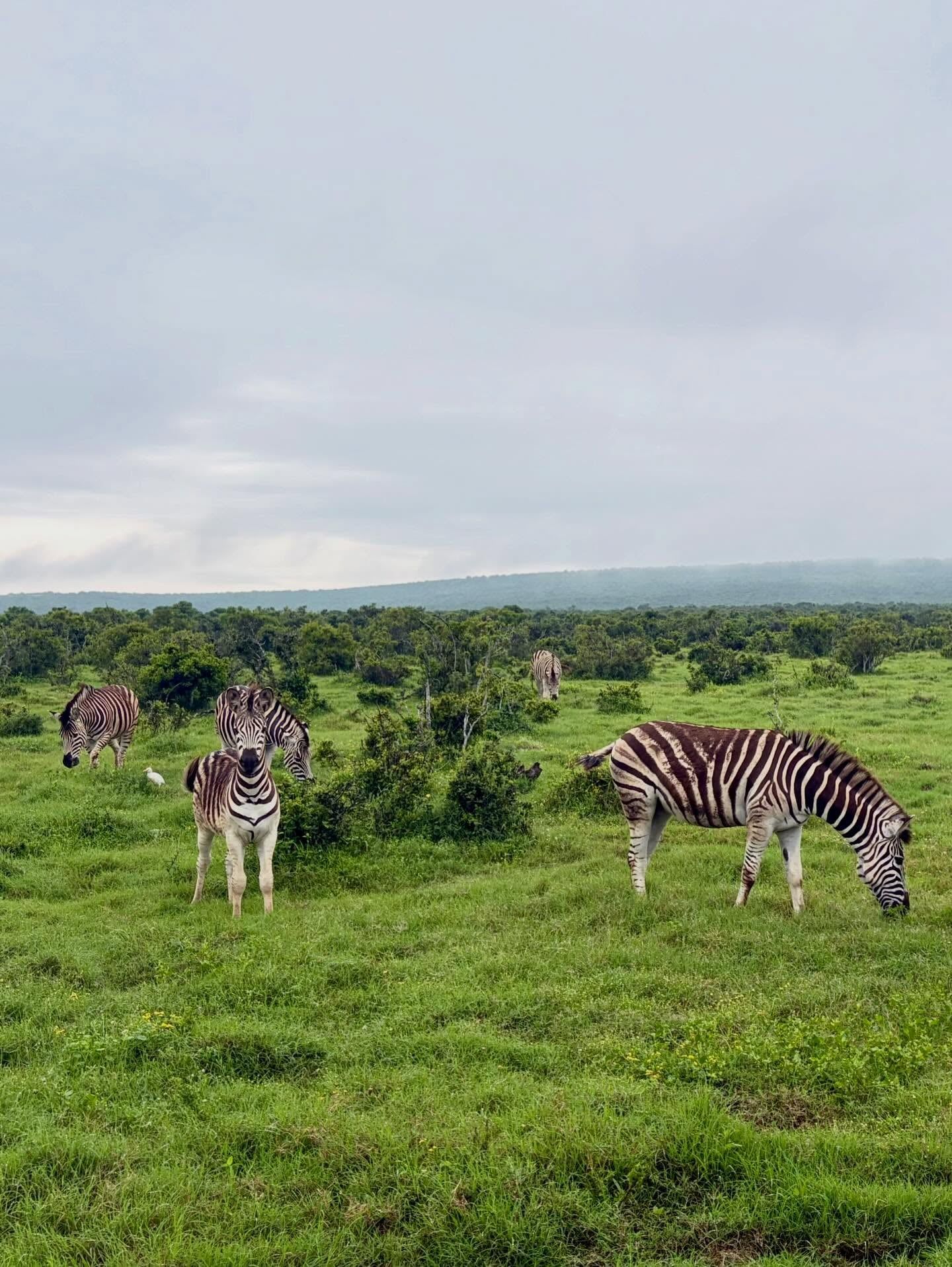
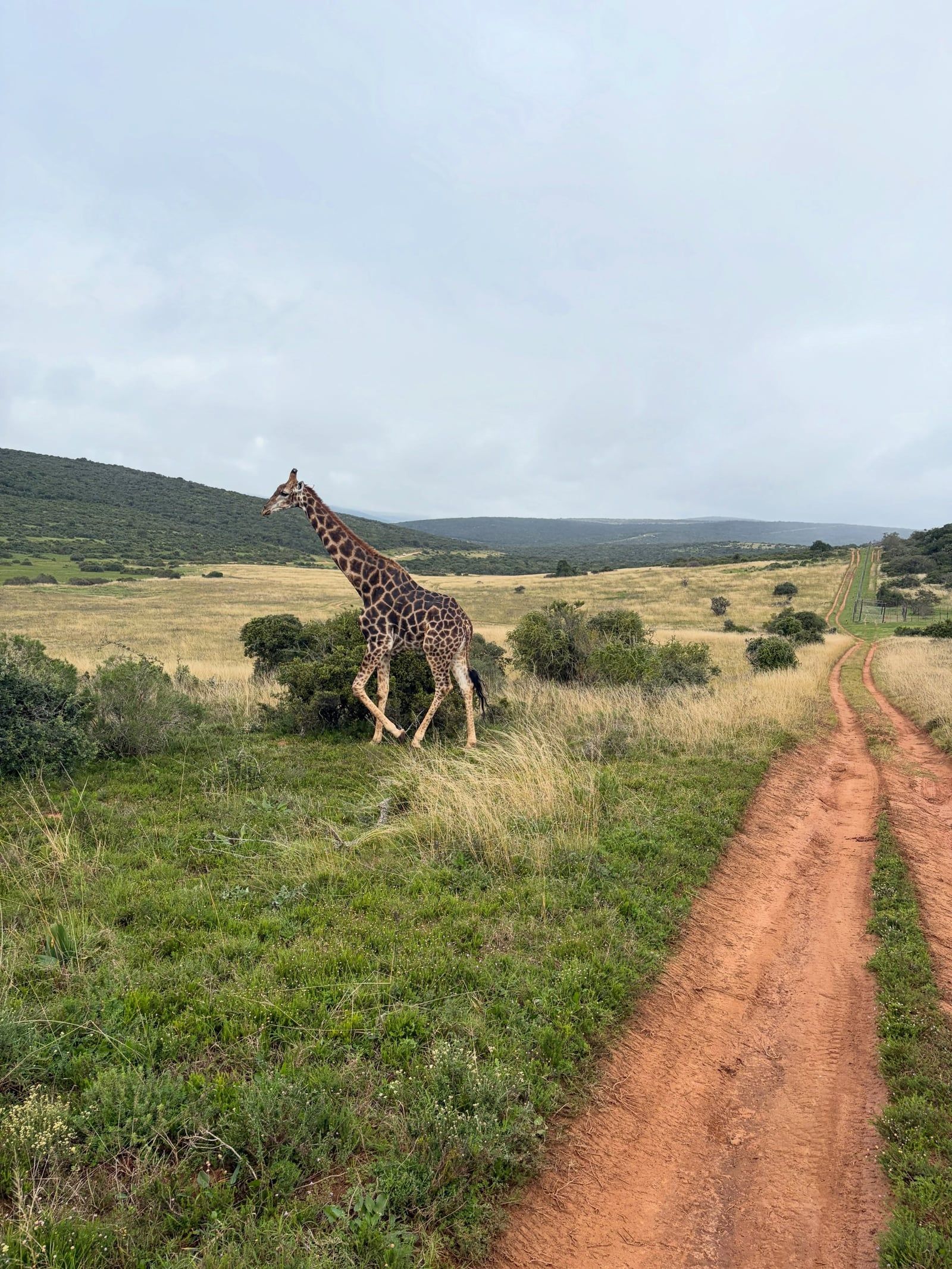
Discover the full history and cultural significance on our About page.
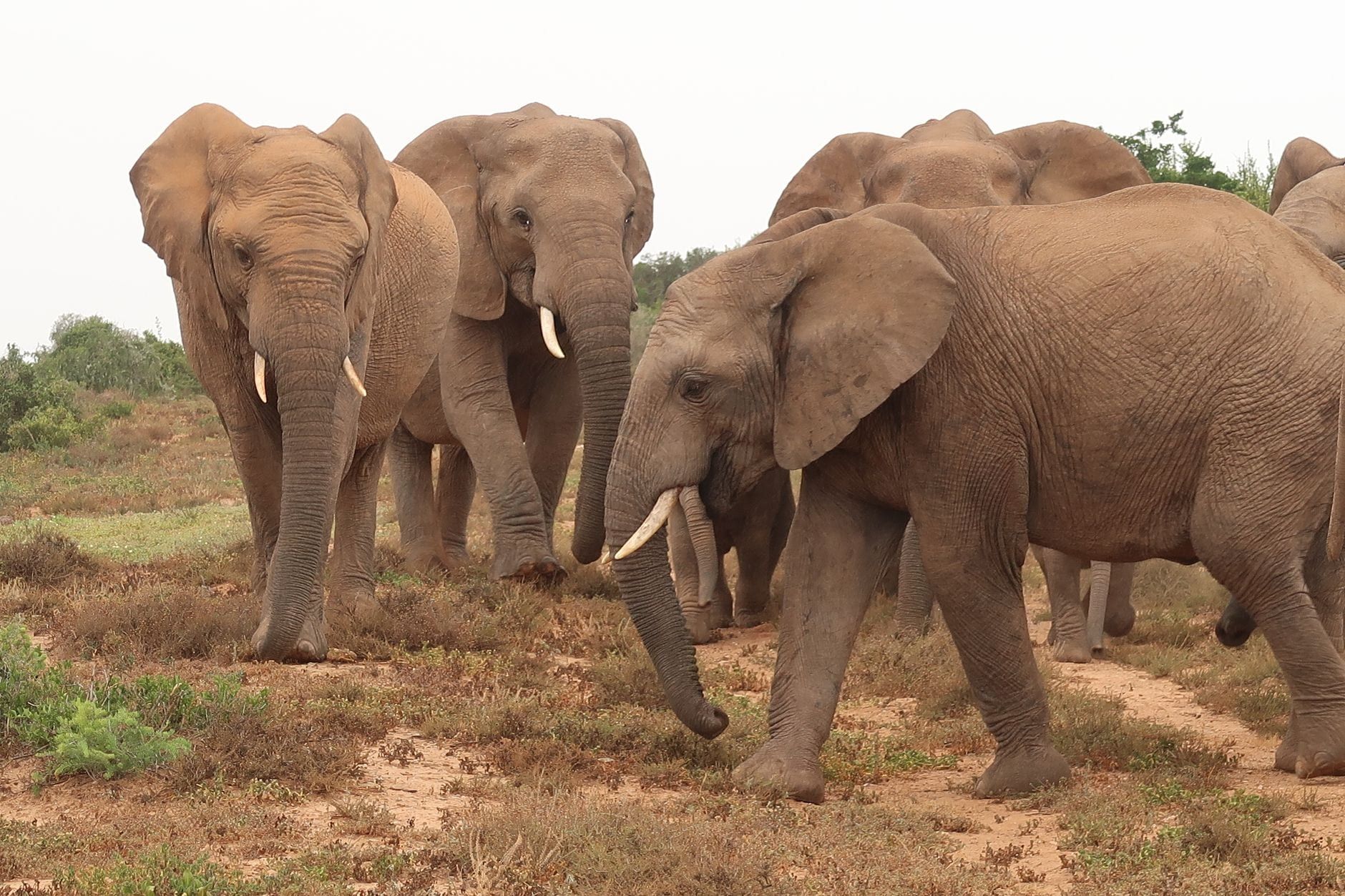
Park at Hapoor Dam in the late morning and watch breeding herds stream in to drink and cool off — self-drivers report dozens at once, with buffalo and warthog on the fringes. The loop road around it is the park's most reliable circuit. Stay an hour.
Main Camp's underground hide puts you at drinking height as animals come to the floodlit waterhole after sunset, while lion, spotted hyena and jackal call through the evening. Just aim your torch at legs and bodies — SANParks bans shining lights into animals' faces.
Addo is one of the last strongholds of the flightless dung beetle, which rolls balls of elephant and buffalo dung up to 50 times its own weight. Watch them trundle across gravel roads in daytime, and drive around them — they can't get out of your way.
A marine protected area around St Croix and Bird Islands adds great white sharks and seasonal southern right whales to the classic Big Five. Boat-based eco-tours complete the set. Very few parks on earth manage elephants and great whites under one system.
Book a guided Addo safari from $129.46 — most tours include hotel pickup from Port Elizabeth and free cancellation up to 24 hours before departure.
Swipe to see more
 Free Cancellation 9h
 Free Cancellation 9h
 Free Cancellation 10h
 Free Cancellation 7h Free Cancellation 9h
 Free Cancellation 9h Free Cancellation 9h Free Cancellation 10h Free Cancellation 9h Free Cancellation 9h Free Cancellation 7h
 Free Cancellation 9h Free Cancellation 9h Free Cancellation 9h Free Cancellation 10h
 Free Cancellation 8h
Visit Addo between May and September, when the dry winter thins the bush, concentrates elephants and predators around waterholes like Hapoor Dam, and sidesteps the December–January school-holiday crowds. Rain falls modestly year-round, so the park stays workable in every season.
September is part of the prime window, but heat builds through October and November, big game goes quiet at midday, and bush thickens with the first rains.
Hot, with afternoon showers, lush thick bush that hides animals, and December–January school holidays packing the loops with day visitors. Best season for birding and coastal marine life, though.
Conditions improve steadily. By May you're into the dry, mild stretch where vegetation thins and animals concentrate at waterholes, and the holiday crowds have long gone.
The sweet spot. Dry and mild, with sparse bush and elephants gathering in numbers at Hapoor Dam, predators easier to find, and game-area gates open from about 05:30–06:00. Pack warm layers for cold mornings in open vehicles.
The park is open daily, year-round. Main Camp Reception runs 07:00–19:00; Matyholweni Reception 07:00–17:00. The Main Entrance Gate allows entry from 07:00 and exit until 19:00 in every season; Matyholweni Gate takes entries from 07:00 and closes for exit at 18:30. Gates to the game-viewing areas shift with the seasons — published schedules show openings between roughly 05:30 and 06:00, and closings between 17:30 and 18:30 — and SANParks asks visitors to confirm current game-area times at reception, since driving there after the posted closing time is prohibited. Overnight guests get a break: they can enter or exit until 22:00 if they've told Reception, though after 22:00 there's no access without prior arrangement. The camp shop opens 08:00–18:00 in winter and 08:00–19:00 in summer.
| Category | Price |
|---|---|
| International adult (12+), daily conservation fee | R492 |
| International child (2–11) | R246 |
| SADC national adult | R225 |
| SADC national child | R112 |
| South African citizen/resident adult | R110 |
| South African citizen/resident child | R54 |
| Children under 2 | Free |
| Wild Card holder (all categories) | Free entry (Wild Card International All Parks Cluster: R4,680 individual / R7,310 couple / R8,745 family per year) |
These tariffs apply to the 1 November 2025 – 31 October 2026 season; fees are revised annually, with new prices taking effect each 1 November. No booking is needed for a day visit — just turn up with a completed Gate Registration & Indemnity Form plus ID, and a driver's licence and vehicle licence disk (the rule is literally 'NO DOCUMENT means NO ENTRY'). Guided game drives, horse rides, hikes and the hop-on-guide service do require booking, at the Game Drives Reception in Main Camp or via sanparks.org. South African citizens get free entry during the SANParks free-access week — 7–13 September 2026, park entry only, activities excluded. There's no separate senior day-fee category, but SANParks gives senior-citizen discounts on accommodation for South African permanent residents aged 60+ who book in their own name. One planning trick: buy your permit the afternoon before, because the game-area gates open earlier than the ticket office and you'll want to be on the loops at first light.
For complete schedules and ticket prices, visit our Hours & Fees page.
Fly into Gqeberha (Port Elizabeth) Airport, 75 km away, and drive about an hour on the N2 following signs to Addo. Garden Route road-trippers can instead enter through the Matyholweni gate near Colchester, at the route's eastern end.
📍 Addo Elephant National Park, Main Camp entrance off the N2, Eastern Cape, South Africa. Note: SANParks' published directions give no formal street address — the park lies 72 km north-east of Gqeberha (formerly Port Elizabeth) and is signposted from the N2; drivers coming up the Garden Route typically use the Matyholweni gate near Colchester.
The airport (PLZ) has several car-hire agencies on site. Take the N2 and follow the Addo signs — the park boundary sits 48.7 km from the airport by road (about 43 minutes), with Main Camp a little further on, so budget an hour door to door. Roads are good and signposted. Fill your tank before entering; the only fuel is near the gate, and the only restaurant is at Main Camp.
Operators such as Into Country Tours (group size 2-60) and African Budget Safaris run full-day Big 5 safaris collecting you from Gqeberha hotels, the airport or the cruise port — roughly an hour's drive each way before a full day in the park. GetYourGuide sells an all-inclusive 9-hour small-group version with lunch. Entry fees are included on most all-inclusive tours. That's the pick if you'd rather not drive on the left.
Gqeberha has regular direct flights from Johannesburg, Cape Town and Durban — about 1.5 hours from OR Tambo on carriers such as FlySafair and Airlink. From the arrivals hall, either rent a car or join a guided tour for the final hour's drive. This is the standard route for visitors combining Addo with Cape Town or the Kruger. Remember the conservation fee on arrival.
Addo sits at the eastern end of the Garden Route, roughly 1-1.5 hours beyond it, so it slots naturally onto a Cape Town road trip as a half-day to full-day add-on. Drivers usually enter via the Matyholweni gate near Colchester. Prefer someone else at the wheel? Tours by Locals lists private options from about US$638 for 1-2 people, and African Overland Tours runs multi-day itineraries.
For detailed transport options and routes, visit our Directions page.
The game-area gates open before the ticket office does, so buy your entry permit the afternoon before if you want to be on the loops at first light — that's when lions and hyenas are most active. Also download and pre-complete SANParks' gate registration and indemnity form. It cuts your document check down to minutes.
SANParks enforces a strict rule at Addo's gates: driver's licence, ID or passport for every passenger over 18, and a valid vehicle licence disk. "NO DOCUMENT means NO ENTRY" — no exceptions at entry or exit. Bring originals, not photos, and keep them in the car rather than your luggage.
For about R360 per vehicle, a trained SANParks guide rides in your own car for a two-hour stint, pointing out animals you'd never spot alone. It costs less per person than a group drive if you're three or four travelling together. Book at the Game Drives Reception in Main Camp, or via sanparks.org.
Work your schedule around the waterholes, not the clock. Elephants gather at Hapoor Dam in the late morning — self-drivers report dozens at once — so park there for an hour and wait. Save predator loops for dawn and dusk, or book a night drive (roughly R480–R550 per person, about two hours).
Main Camp's waterhole is floodlit at night, and the underground hide puts you at eye level with animals coming to drink. Etiquette matters here: never shine a torch into an animal's eyes or face — light its body or legs instead. Camp lighting is limited, so bring a headlamp for walking after dark.
The only restaurant is at Main Camp, and the camp shop closes at 18:00 in winter and 19:00 in summer, so a full-day loop can leave you far from both. Fill your tank at the small fuel station near the gate, and pack a cooler with food and water. The gate map shows every loop — keep it on the passenger seat.
The 'Jewel of the Eastern Cape' sits on the banks of the tidal Sundays River between large sand dunes. Add river cruises, canoeing, fishing or swimming to a safari day — an easy, low-effort complement to game driving.
Part of Addo itself, this coastal section is often cited as one of the world's largest dune fields, stretching roughly 40 km. Hike the Alexandria Trail or shorter forested kloof walks past wild, undeveloped beaches.
A neighbouring Big 5 private reserve in the Greater Addo region, and one of the few other places where the flightless dung beetle survives. Its lodge-based, fully guided safaris pair well with Addo's self-drive style.
Read what travelers share about their experience visiting Addo Elephant National Park — from practical tips to personal highlights.
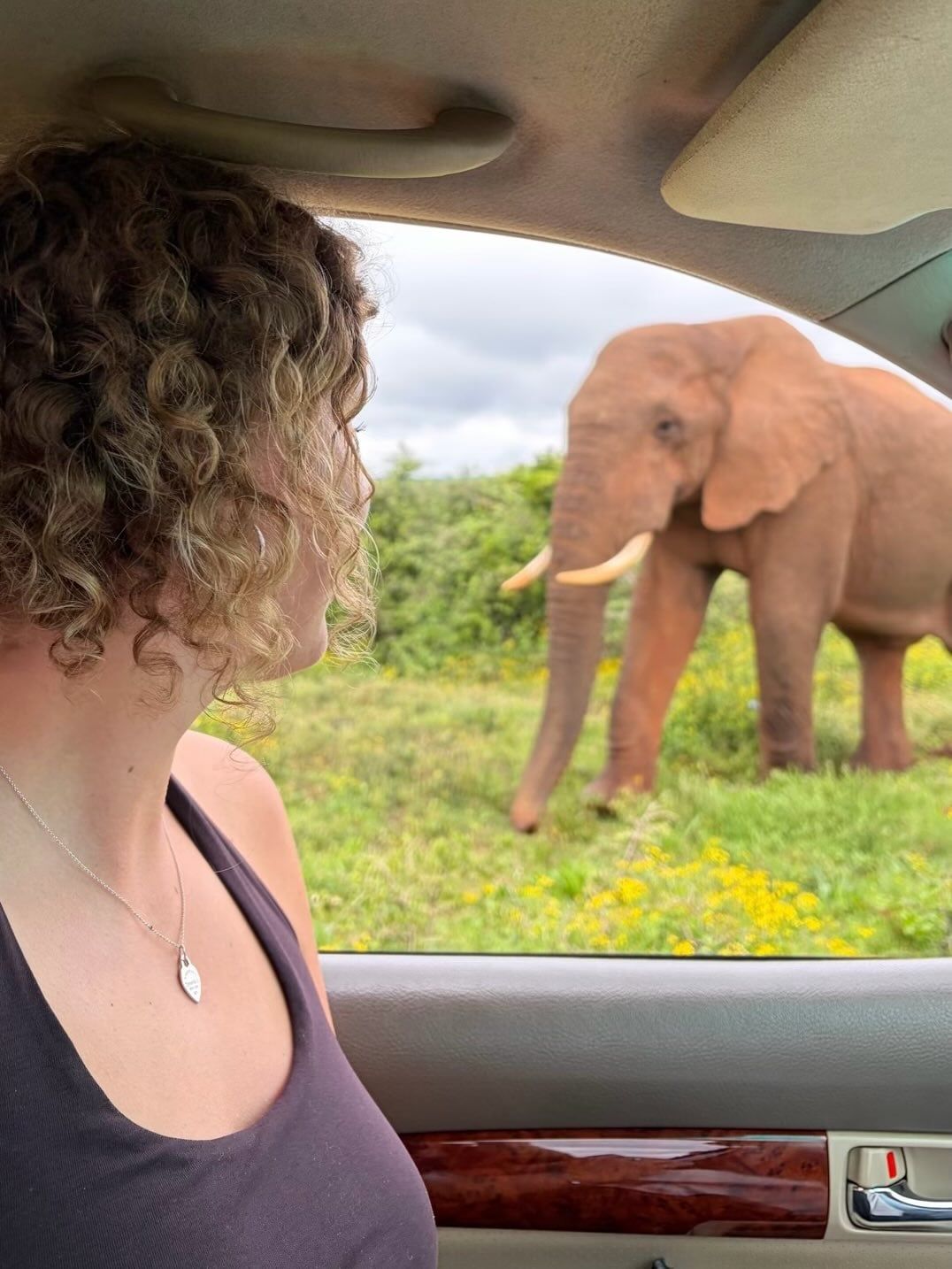
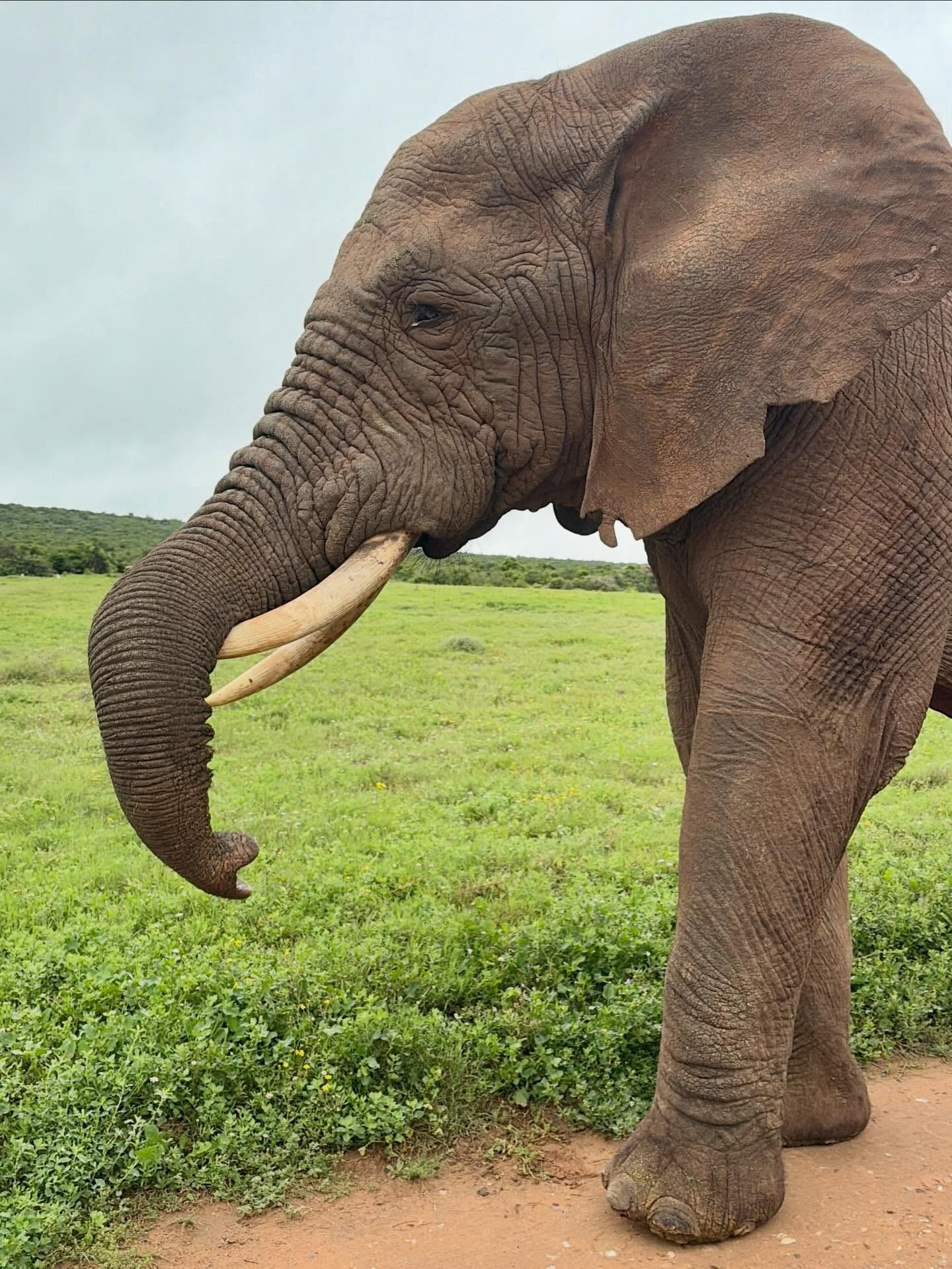
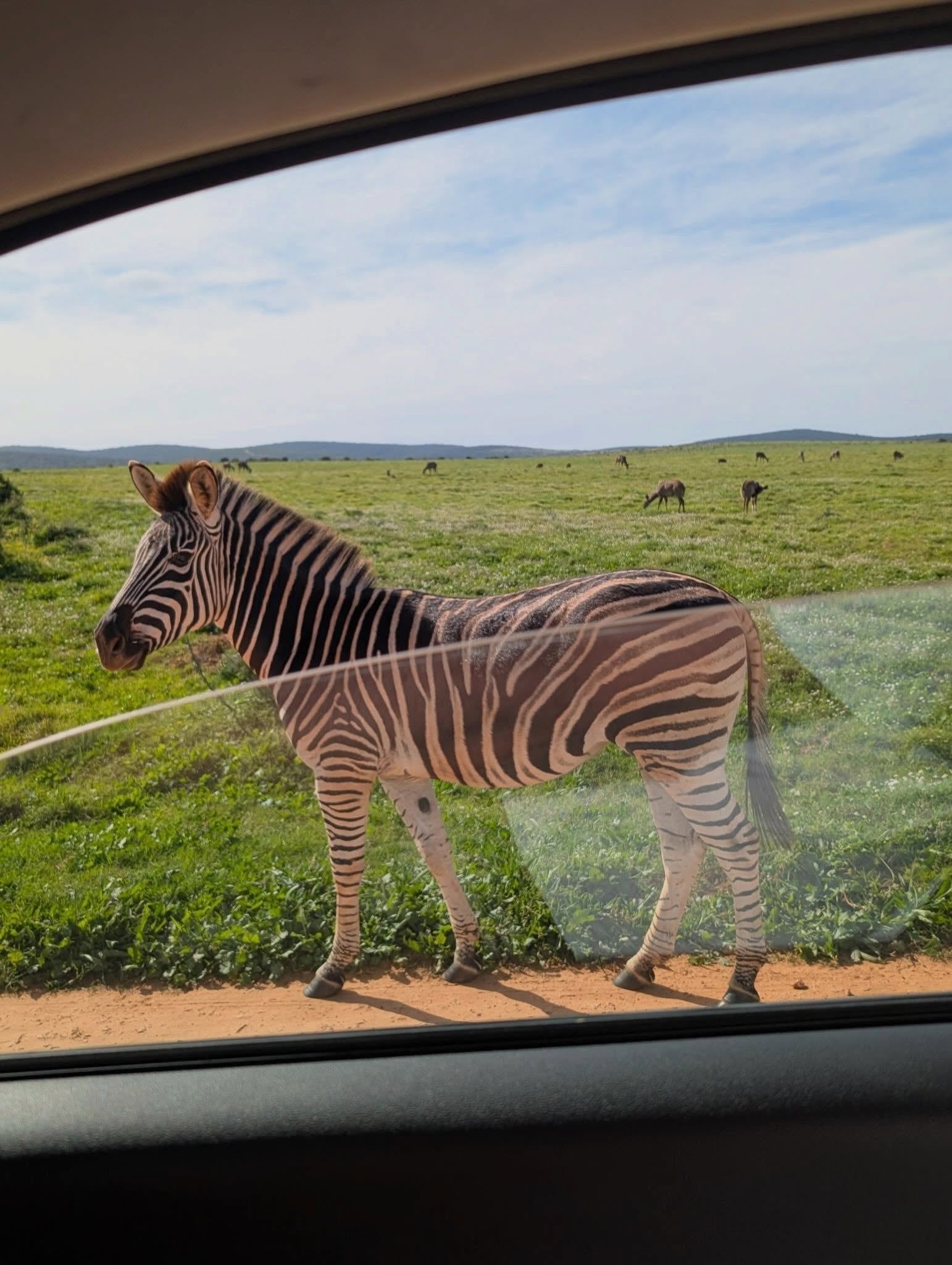
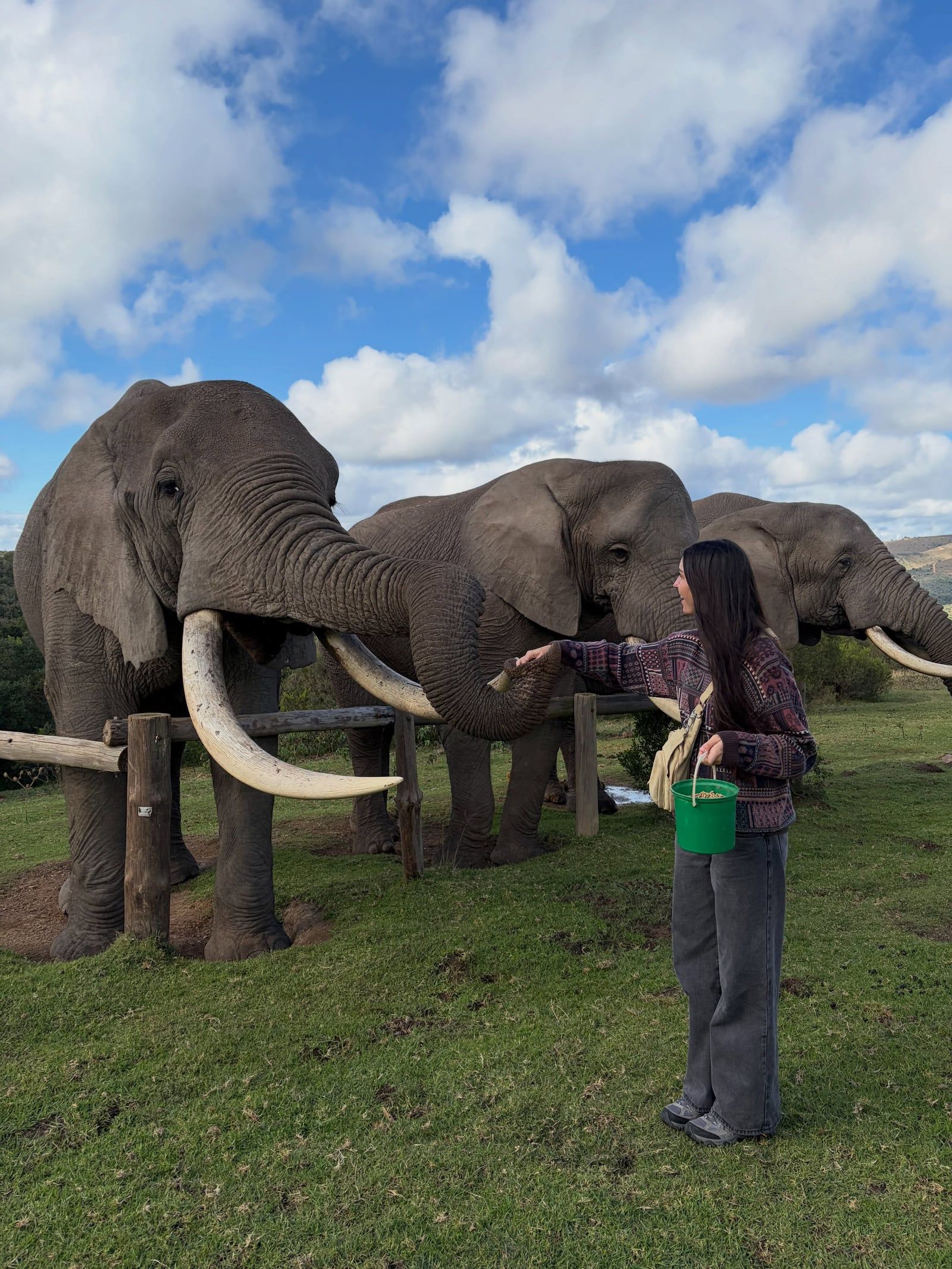
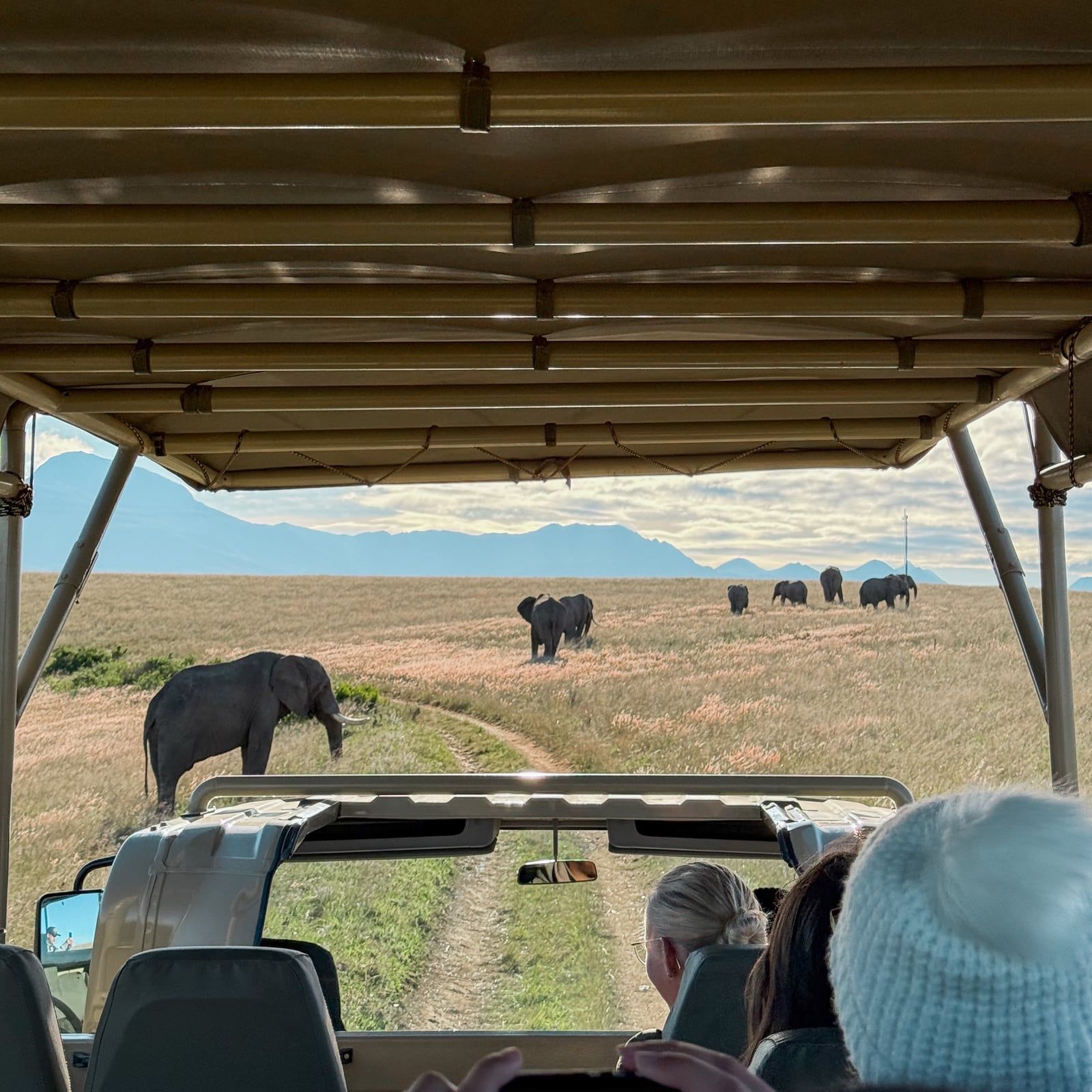
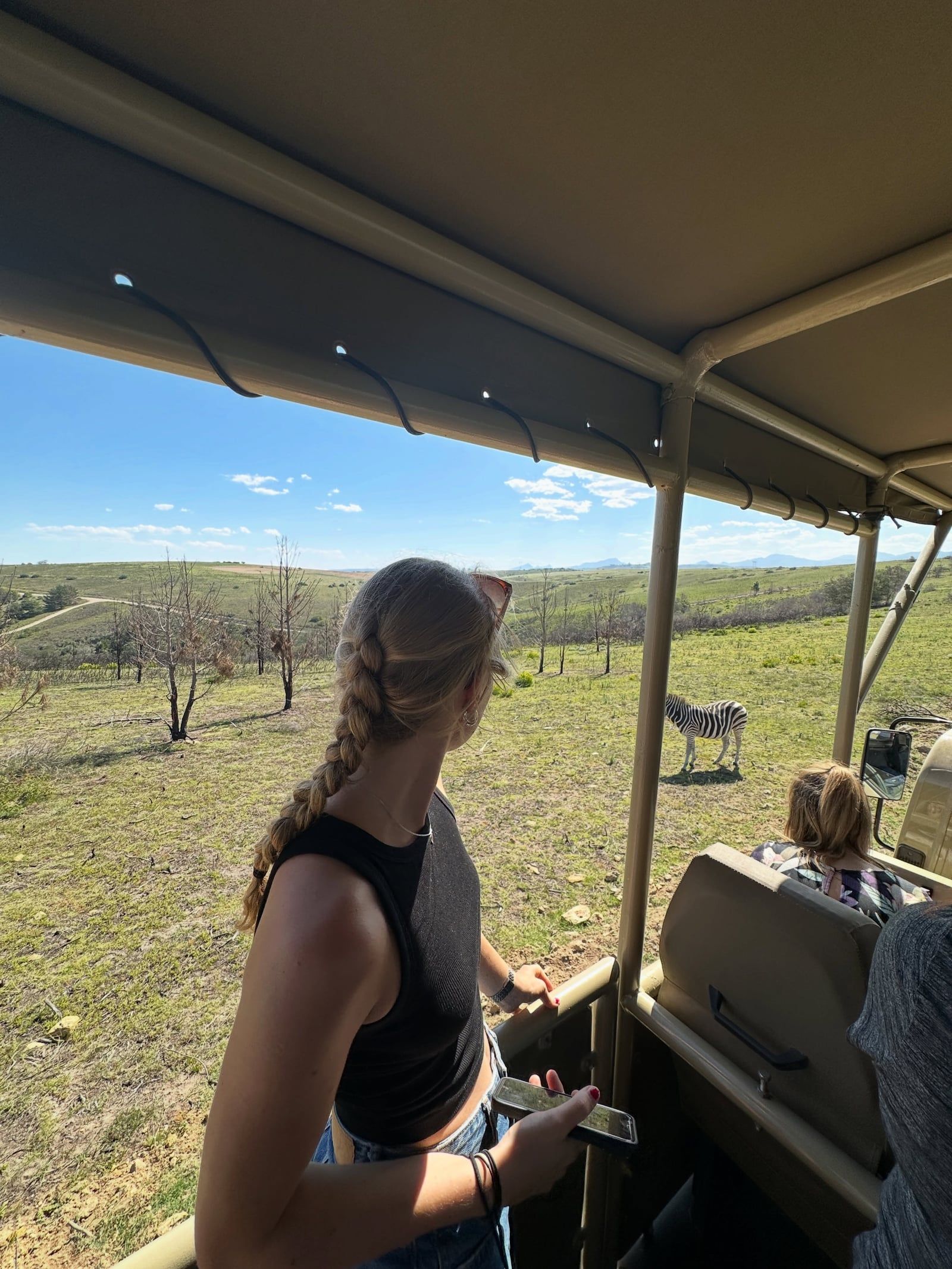
Planning advice, comparisons, and practical tips.
An hour's drive north-east of Gqeberha, Addo Elephant National Park does something almost nowhere else in Africa can: it hands you a genuine Big Five…
Where you sleep shapes an Addo trip more than anything else you'll plan — more than the month, more than the rental car. Stay inside the park and the…
For 1 November 2025 to 31 October 2026, international visitors pay R492 per adult (12+) and R246 per child (2–11) per day; SADC nationals pay R225/R112 and South African citizens R110/R54, with under-2s free. Fees reset each year on 1 November, so check the SANParks tariff before your trip. Frequent visitors should price a Wild Card — the International All Parks Cluster costs R4,680 for an individual or R8,745 for a family (2 adults plus children up to 18) per year.
The Main Entrance Gate allows entry from 07:00 and exit until 19:00 year-round; Matyholweni Gate runs 07:00 to 18:30. Game-area roads open and close by season (roughly 05:30–06:00 opening, 17:30–18:30 closing), and you can't drive there after the posted closing time — confirm the current schedule at reception. Overnight guests can enter or exit until 22:00 if they tell Reception in advance.
Yes — the park is about 72 km north-east of Gqeberha, roughly a 1-hour drive from the airport (PLZ), where several car-hire agencies operate. Prefer a guided option? Full-day safaris with hotel or cruise-port pickup run R2,700–R3,132 per person, entry fees usually included. Day trips typically last 8–9 hours including transfers.
Most visitors spend one full day (about 8–9 hours) self-driving the main game area, and a compressed 4–6 hour loop covers the Hapoor Dam highlights. Allow 2–3 days if you want the Zuurberg Mountains, Darlington Dam, Kabouga, the Woody Cape coast, or a marine eco-tour.
May to September: the dry winter thins the bush and pulls animals to waterholes, making elephants and predators much easier to find, and you dodge the December–January school-holiday crowds. October to March is hotter and lusher, with game less active at midday — better for birding and coastal marine life.
The driver needs a driver's licence, every passenger over 18 needs an ID or passport, and the vehicle needs a valid licence disk — SANParks' rule is "NO DOCUMENT means NO ENTRY." You must also hand in a completed Gate Registration & Indemnity Form with ID, so download and pre-fill it to save time. Buy your permit the afternoon before if you want to be on the loops at first light.
Largely yes — the main game-viewing loop is driven entirely on maintained gravel and paved roads, and Addo Rest Camp Cottage CO2Z is designated accessible, with two single beds and a shower bathroom. The PPC Discovery Trail is built for visually and mobility-impaired visitors, and the malaria-free status removes a big health concern for seniors and kids. Note the swimming pool is for overnight guests only, and some night drives don't take children under 6, so confirm when booking.
A day visit needs no booking, but guided activities do — sunrise, sunset and night drives cost roughly R480–R550 per person for about 2 hours, and a hop-on-guide who rides in your own car runs from about R360 per vehicle. Book through the Game Drives Reception office at Main Camp or at sanparks.org. Overnight guests have five SANParks rest camps to choose from (Addo Main Camp, Matyholweni, Nyathi, Spekboom Tented Camp and Langebos Huts), with self-catering cottages from around R2,207–R2,641 per night depending on season.
Browse verified tours with free cancellation and instant confirmation.
Find Tours


