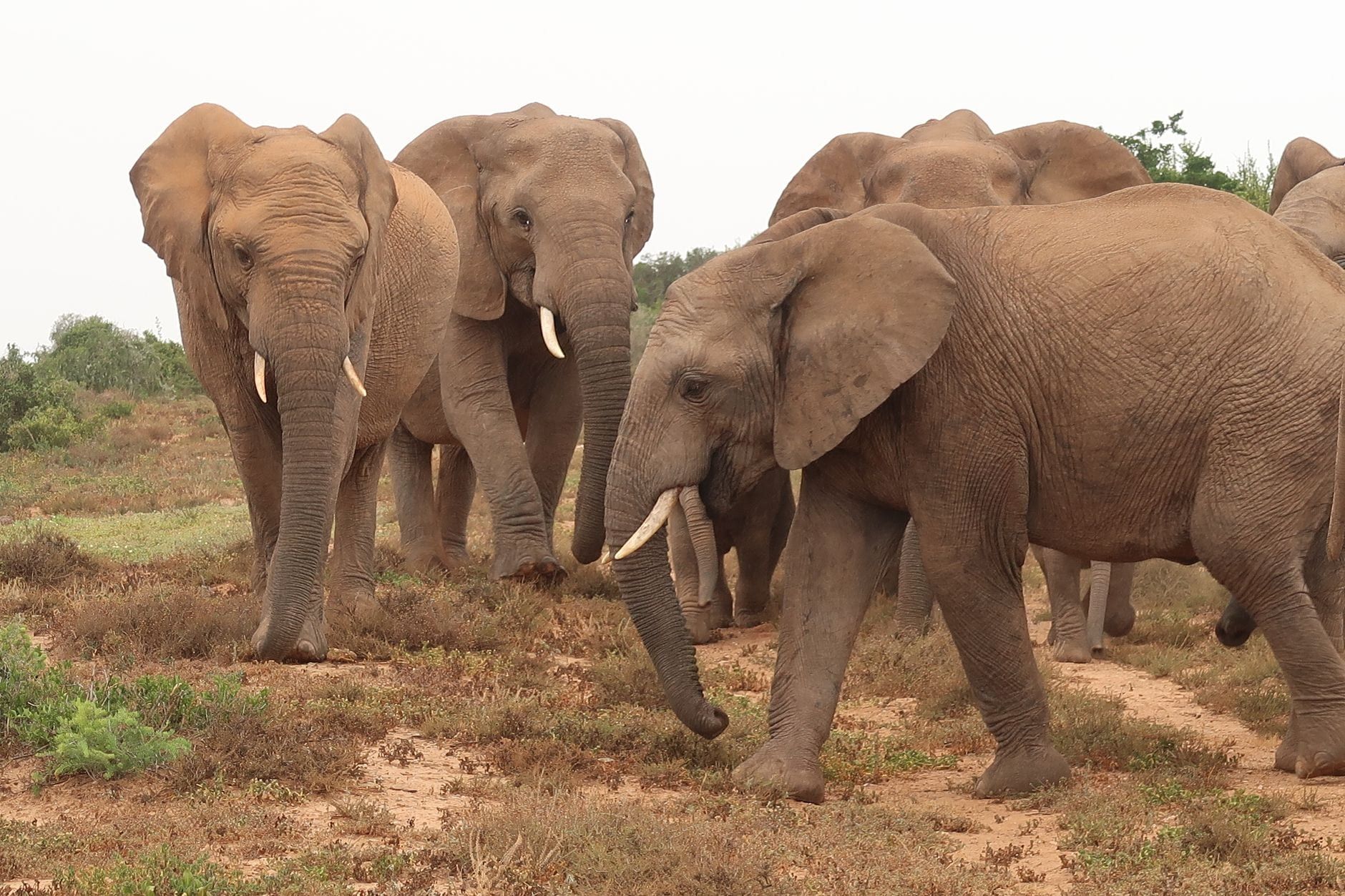
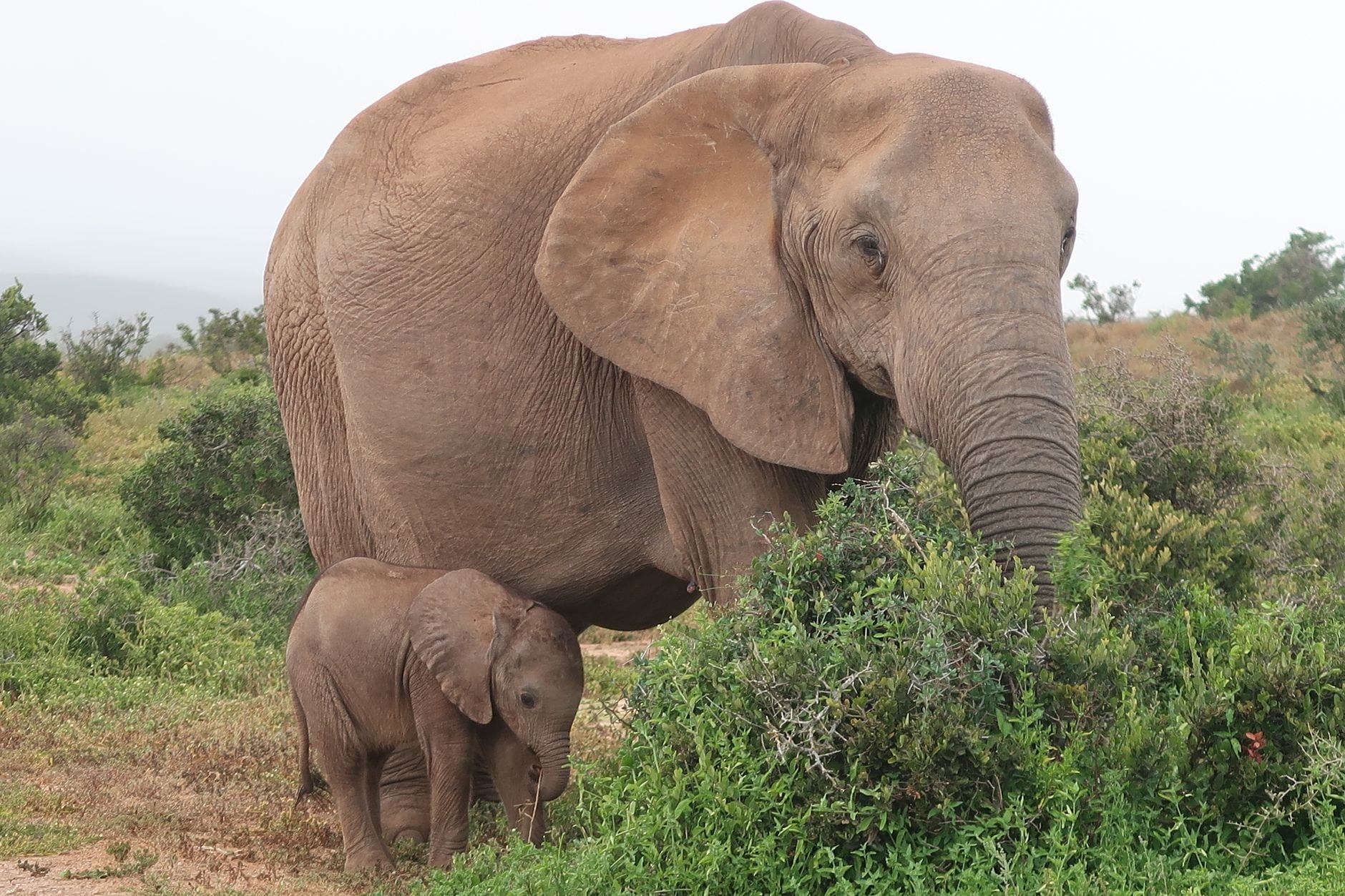
An hour's drive north-east of Gqeberha, Addo Elephant National Park does something almost nowhere else in Africa can: it hands you a genuine Big Five safari that's malaria-free, drivable in a rental sedan, and cheap enough to bolt onto a Garden Route road trip. More than 600 elephants live here, in one of the densest populations on the continent, and they're the reason most people come — though the park's full story runs from a near-extinction in 1919 to a 1,640 km² protected area reaching from the Zuurberg Mountains to the Indian Ocean.
Why Addo Elephant National Park Is a Safari Worth Taking
Addo began as a rescue operation. Farmers' complaints about crop-raiding elephants led Major P. J. Pretorius to shoot roughly 120 of them between June 1919 and August 1920, cutting the Eastern Cape population from about 130 to 16. When the park was proclaimed on 1 August 1931 — just 2,270 hectares of thicket — only 11 elephants remained inside. A predator-proof fence went up in 1954, and the population has since climbed past 600, with some park materials citing 800+. Successive expansions added the Zuurberg Mountains, Darlington Dam, the Woody Cape coast and a marine protected area around St Croix and Bird Islands, making Addo South Africa's third-largest national park at roughly 1,640 km².
That scale is why the park sells a "Big Seven" rather than a Big Five: elephant, lion, leopard, buffalo and rhino on land, plus great white sharks and southern right whales in the marine section. The marine two require a separate boat tour from the Gqeberha side, so don't book a game drive expecting whales. The park also shelters one of the last populations of the flightless dung beetle and over 400 bird species across five biomes.
The practical case is just as strong. Addo is malaria-free — no tablets, no immunisations, which matters if you're travelling with children or older parents. The Main Gate sits 72 km north of Gqeberha on the R335, so it slots onto the eastern end of a Garden Route itinerary without rerouting anything. And because the elephants are habituated to vehicles, first-timers get close, relaxed sightings that self-drivers in bigger parks wait days for. If you want the backstory before you go, our guide to the park's history and highlights covers it in depth.
Three Ways to Safari: Self-Drive, Guided Game Drives & Hop-On Guides
Every Addo safari falls into one of three formats, and the differences are mostly about money and who's holding the binoculars. Here's what each actually costs and involves.
Self-drive: the cheapest option
Driving your own car through the game area costs nothing beyond the daily conservation fee — R492 per international adult at the current tariff. You set the pace, stop where you like and stay at a sighting for an hour if the herd is bathing. A standard rental sedan handles the main tourist roads, a mix of tar and maintained gravel. The catch: the game area closes to day visitors in the early evening, so you'll never see it after dark.
SANParks guided game drives
The park's own drives last about two hours in open-sided safari vehicles and depart six times daily: sunrise at 05:30 in summer (06:30 in winter), morning at 09:00, midday at 12:00, afternoon at 15:00, sunset at 17:30 (17:00 winter) and night at 19:30 (19:00 winter). Price is R480–R550 per person. There's a two-guest minimum, children under 6 aren't allowed, and bookings must be confirmed 24 hours ahead — do it at the Game Drives Reception in Main Camp or via sanparks.org. Sunset and night drives are capped at 30 and 44 guests respectively, versus 74 on day drives, so the golden-hour departures feel far less crowded. Browse our guided safari tours at Addo to compare what's bookable.
Hop-on guides: an expert in your passenger seat
The underrated middle path. A community-trained hop-on guide rides in your own vehicle for a two-hour drive, pointing out animals you'd roll straight past and explaining the thicket ecology. It costs R400 for a sedan (R430 for a 6-seater, R520 for a minibus). For a family of four already paying entry fees, that's cheaper than four seats on an open-vehicle drive, and you keep your own schedule.
Private tours from Gqeberha
No car? Full-day safaris with hotel or cruise-port pickup from Gqeberha run R2,700–R3,132 per person, entry fees usually included, with operators like Into Country Tours and African Budget Safaris. A roughly nine-hour small-group version with lunch sells from about US$186 on booking platforms. Half-day options exist for around €70 excluding fees, though honestly the full day is the better buy — the drive alone eats two hours. See our full-day Addo tours for the options.
Self-Drive vs Guided: Choosing Your Safari Style
So which format? The honest answer is that most Garden Route road-trippers should self-drive, and almost everyone should add one guided drive on top. Here's the trade-off in numbers.
| Self-drive | SANParks guided drive | |
|---|---|---|
| Cost per person | R492 conservation fee only | R480–R550 plus entry fee |
| Vehicle | Your own car or rental sedan | Open-sided safari vehicle |
| Flexibility | Stop as long as you like | Fixed ~2-hour route and schedule |
| After-dark access | None — game area closes at dusk | Sunset and night drives available |
| Best for | Budget road-trippers, families | Car-free visitors, photographers |
Guides earn their fee in two ways. They know the terrain and share sightings through radio contact with other vehicles, which sharply improves your odds on lions — the one animal self-drivers regularly miss. And the open vehicles sit higher than a sedan, so photographs clear the grass rather than shooting through it. What you give up is control: two hours, a fixed route, other guests.
The hybrid is the sweet spot. Self-drive through the day, when elephants at waterholes carry the show, then book the 19:30 night drive (19:00 in winter) — the only way day visitors experience the park after dark, and the hours when lions, spotted hyena and jackals get active. Photographers should do it the other way round: guided drives at dawn and dusk, self-drive the quiet midday for elephants.
Planning Your Drive: Getting There, Gates & Routes
Fly into Gqeberha (PLZ), rent a car at the airport and you're about an hour from the park. One warning worth repeating: avoid the R335 stretch through Motherwell on Gqeberha's outskirts — route via Paterson instead, which adds little time and none of the stress. Garden Route road-trippers usually come off the N2 near Colchester and enter through the southern gate. Full routing detail, including airport-to-gate timings, is in our directions guide to Addo.
Addo has two entrances, and which one you use shapes your day. The Main Gate, 72 km north of Gqeberha on the R335, opens onto the heart of the game area and has the reception, shop and fuel station nearby. Matyholweni Gate, reached from the N2 near Colchester, is the southern entrance — handier for Garden Route drivers, but it closes 30 minutes earlier (18:30 versus 19:00), so don't plan a late exit there. The smart play for a one-way day: enter south at Matyholweni and exit north at the Main Gate, seeing both landscapes without doubling back. The full north–south crossing takes roughly five to six hours with stops.
Hapoor Dam: the anchor route
If you drive only one road, make it the loop around Hapoor Dam. This permanent waterhole at the centre of the main game area is Addo's most reliable elephant spot, with dozens gathering to drink and wallow on warm days, buffalo and warthog on the fringes. The approach runs through dense spekboom thicket — a succulent shrub that gives the valley its dense, green-on-grey look and hides everything until it steps out. Budget at least two hours here. Park, switch off, wait.
Before you enter: fill the tank (fuel is limited to a small station near the Main Gate) and have your paperwork ready. Every vehicle hands in a completed Gate Registration & Indemnity Form at the gate, and SANParks' document rule is strict — driver's licence, ID or passport for every passenger over 18, and a valid vehicle licence disk. No document means no entry, so carry originals. The entry map you're handed shows which roads are tar and which are gravel.
Best Time to Visit & What Wildlife You'll See
May to September is the best window, full stop. The dry winter thins the spekboom, mild days make animals easier to spot, and everything concentrates at the waterholes. It also dodges the December–January school-holiday crowds that pack the loops. Rain falls modestly year-round rather than in one wet season, so there's no month to write off — summer (October to March) is lusher, hotter and better for birding, and the midday lull just means you should plan around it, not skip it.
Game-area gates open between roughly 05:30 and 06:00 and close between 17:30 and 18:30 depending on season — SANParks asks you to confirm current times at reception, and you may not drive the loops after the posted closing. Dawn and dusk are the prime hours whatever the month. Lions and spotted hyenas show up mostly early or on night drives; midday belongs to the waterholes.
The waterhole strategy
Sightings at Addo cluster around water, so plan your loops around it. Hapoor Dam and Carols Rest are the two dependable names in the main game area. At Main Camp itself there's an underground hide overlooking a waterhole, putting you at eye level with whatever comes down to drink — the closest view of elephants you'll get anywhere in the park without leaving your seat. Check the sightings board near reception each morning before setting out; it's updated daily and tells you where the lions were last seen.
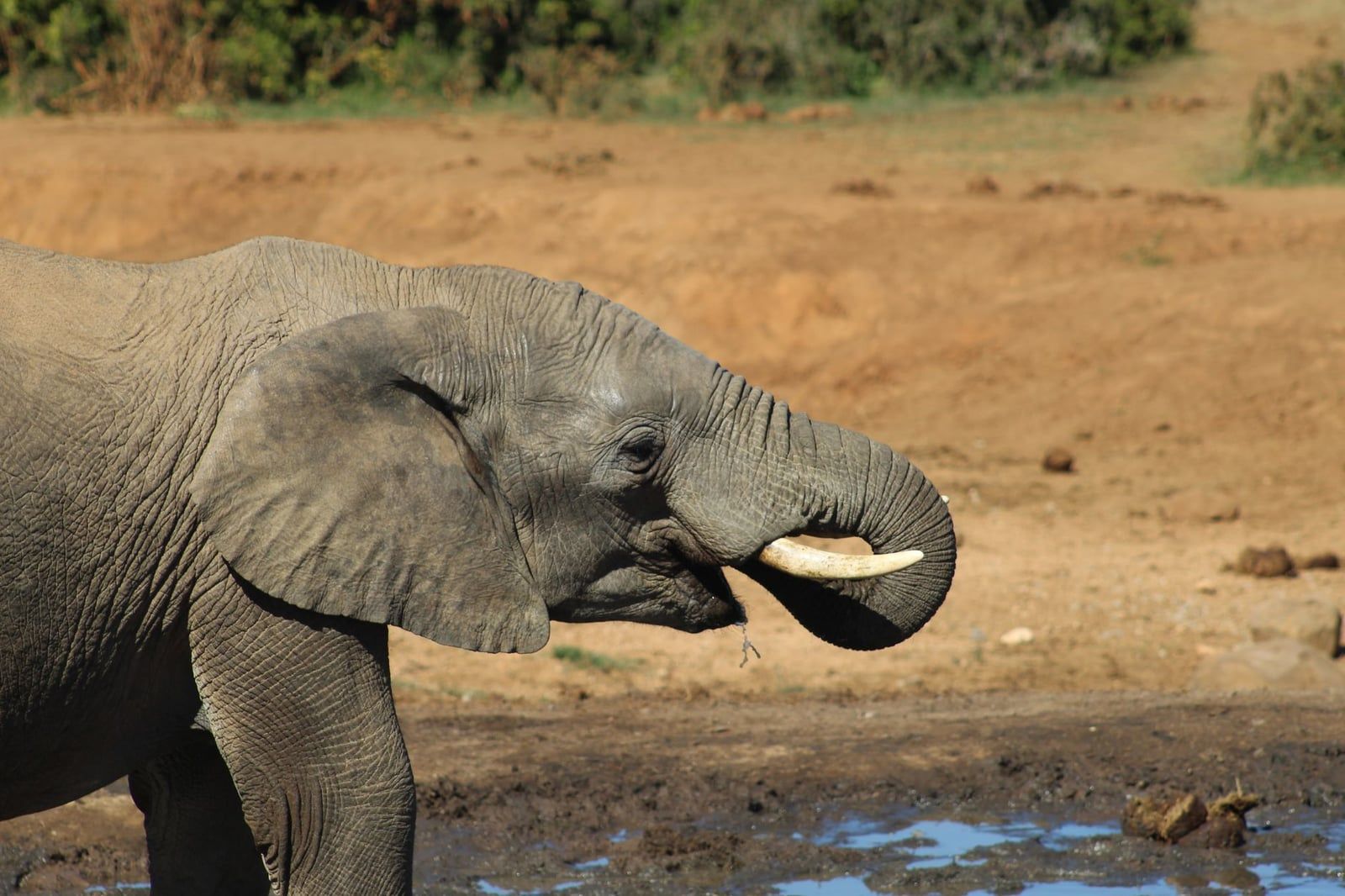
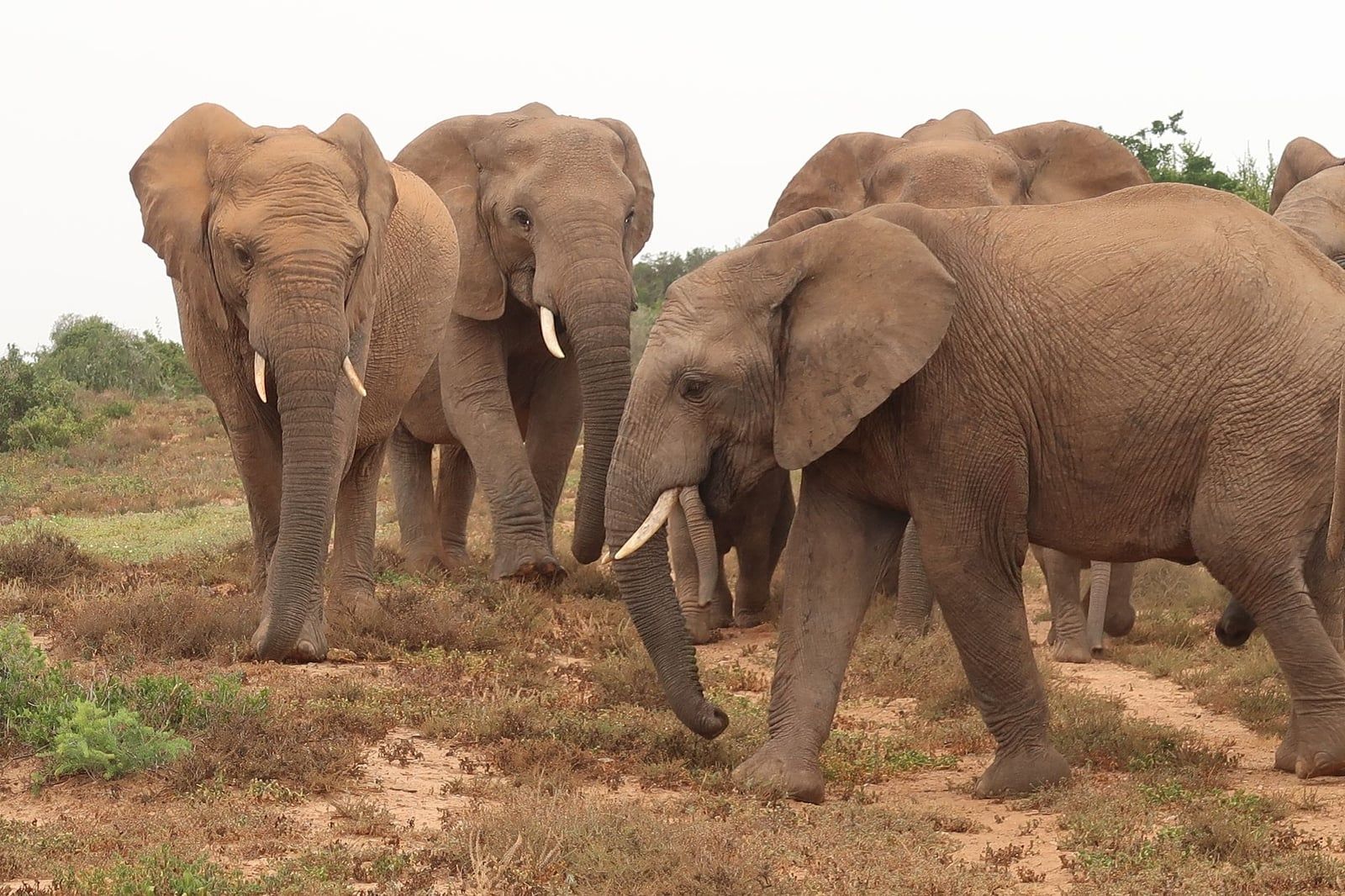
Set expectations honestly. Elephants are near-guaranteed — that's the park's whole pitch, and it delivers. Buffalo (around 400 of them), zebra, warthog and kudu are common. Lions and the 48-odd south-western black rhino take patience and luck. Leopards are the honest miss: most visitors never see one, and the thick bush is why. Beyond the mammals, more than 400 bird species are recorded, and the roads themselves host the flightless dung beetle, a fist-sized insect found in only a few South African reserves.
Park Rules, Etiquette & What to Pack
The rules at Addo are short and enforced, and two of them are unusual enough to learn before you arrive. The speed limit is 40 km/h throughout the game area, and it's actively policed. And you may not drive over elephant dung — the endangered flightless dung beetle breeds in it, and the beetles themselves trundle across the gravel roads in daylight. Swerving around a beetle is not optional; it's park regulation.
The rest is standard safari discipline. Stay in your vehicle except at designated sites — buffalo 50 metres away can still kill you. Keep at least 30 metres from elephants; if one turns toward your car or raises its trunk, reverse slowly and give way, never rev or honk. Switch your engine off at sightings, never block the road, never feed anything, and take all litter out with you. Drones are banned without SANParks permission. At the floodlit waterhole after dark, don't shine torches into animals' faces — light their bodies or legs instead.
Packing for a day in the car is simple. Sunscreen and a hat, because most of the park is exposed gravel with no shade. Binoculars, because the bush is thick and half the animals start as a flick of movement. More drinking water than you think you need, plus snacks — the only restaurant is at Main Camp, hours from the far loops. A camera, a card that works at the gates, and some rand as backup. In winter, add warm layers for the 06:00 start; torches matter too, since camp lighting after dark is limited.
Entrance Fees, Gate Times & Practical Logistics
Conservation fees are charged per person per day and reset every 1 November, so treat any figure you read online — including older blog posts citing R344 or R416 — as suspect until you've checked SANParks. The current official tariff:
| Visitor type | Adult | Child (2–11) |
|---|---|---|
| International | R492 | R246 |
| SADC nationals | R225 | R112 |
| SA citizens & residents | R110 | R54 |
Under-2s enter free. A Wild Card — a year of entry to South Africa's national parks — costs R4,680 for an international individual, R7,310 for a couple or R8,745 for a family, and only pays for itself if you're visiting several parks on one trip. A two-week Garden Route itinerary stopping at two or three SANParks parks is exactly that case; a lone Addo day is not. Full breakdowns live on our Addo hours and fees page.
Gate hours are fixed and enforced. The Main Entrance Gate takes entries from 07:00 and exits until 19:00 year-round; Matyholweni takes entries from 07:00 and closes at 18:30. Main Camp Reception runs 07:00–19:00, Matyholweni's until 17:00. Guests with in-park accommodation can enter as late as 22:00 if they've told reception, and the game-area gates reopen to them at 18:30 — the perk that makes staying inside worth the tariff.
Two admin tricks save real time. Buy your entry ticket the afternoon before, because the game-area gates open before the ticket office does and pre-paid visitors drive straight onto the loops at first light. And pre-download the gate registration and indemnity form from SANParks so the document check takes a minute instead of ten.
Where to Stay & Eat for Your Safari
Staying inside the park buys three things: entry until 22:00, access to the game area from 18:30 when day visitors are long gone, and a floodlit waterhole with that underground hide a short walk from your door. On a winter morning you can be photographing elephants before the first day visitor clears the gate.
In-park options span four budgets. Addo Main Rest Camp — campsites, safari tents, family chalets and forest cabins from roughly R2,207–R2,641 a night, or about $60 for a basic cabin — has the restaurant, shop, pool and hide. Nyathi is the quieter, more exclusive SANParks camp. Gorah Elephant Camp is the luxury concession at around €1,650 per night for two with all meals, for when the trip has stopped being about the price. Spekboom Tented Camp and the Langebos Huts round out the list, and our Addo accommodation guide compares them all in detail.
Outside the fence, prices soften. AfriCamps Addo runs glamping tents at about €160 a night for two; the Addo African Home ecolodge sits 10 minutes from the gate; guesthouses in Addo town start around €100; and Colchester, near Matyholweni, suits Garden Route drivers passing through. All are fine bases — you just trade the pre-dawn access.
Food needs planning. Main Camp has the park's only sit-down restaurant (meals around $10) and a shop that closes at 18:00 in winter, 19:00 in summer. Inside the game area, Jack's Picnic Site is the one fenced spot with toilets where you're allowed out of the car — it has braai facilities, so many visitors pack meat and cook lunch there. Otherwise, bring a cooler. A full day on the loops with nothing to eat is a long day.
Sample Safari Plans: 1-Day Trip vs 2 Days (+ What Else to Do)
How many days do you need? One full day covers the main game area well. Two days turns a rushed loop into a proper safari and roughly doubles your predator odds. Here are both, timed to the gates.
The one-day plan (from Gqeberha)
Leave Gqeberha by 06:15 to be at the gate for the 07:00 opening, ticket already bought the day before. Drive straight to the waterholes — Hapoor Dam first, then Carols Rest — while the morning is cool and the bush is at its thinnest for viewing. Midday is for parking at the dam and letting the herds come to you, with a lunch break at Jack's Picnic Site. By 15:00 the sightings curve flattens and the heat wins, so wind toward the exit, stopping at the underground hide near Main Camp on the way out. Garden Route drivers should flip it: enter at Matyholweni at 07:00, finish at the Main Gate by late afternoon. Car-free travellers can hand the whole thing to an operator — our tours from Port Elizabeth list the pickup options, and half-day Addo tours exist if your schedule only allows the morning.
The two-day plan
Day one: the northern loops around Hapoor Dam at your own pace, back to camp by late afternoon, then out on the SANParks sunset or night drive (19:30 summer, 19:00 winter) — the hours when lions and hyenas move. Overnight guests can re-enter the game area from 18:30, so there's no dead time. Day two: the southern section via Matyholweni, different country entirely — more open, fewer vehicles — with a final hour at the Main Camp hide before you go. Book the night drive when you book your bed; the 30-guest sunset cap fills fast in season.
If you have a third day
The park beyond the game area is a different trip. The Zuurberg Mountains, 40–60 minutes north of Main Camp, offer hiking and horse-riding trails through country that holds aardwolf, mountain zebra and gemsbok; zip-lining operates in the Addo area too. The Big Seven requires a marine boat tour from the Gqeberha side — great whites and seasonal southern right whales around St Croix and Bird Islands. And if you want a fully guided, lodge-based safari instead of self-drive logistics, the Amakhala Game Reserve, 45–60 minutes away, is the regional alternative that pairs well with an Addo day.
Addo Safari FAQ
The questions that come up again and again when people plan an Addo trip:
Frequently asked questions
Is Addo Elephant National Park worth visiting?
Yes, if your priority is elephants — 600-plus of them, with sightings close to guaranteed even on a short visit. It's a malaria-free Big Five park you can drive in a rental sedan an hour from Gqeberha, which makes it one of the easiest and most affordable safaris in South Africa.
Do you need a 4x4 for an Addo safari?
No. The main game-viewing roads are a mix of tar and well-maintained gravel that a standard sedan handles fine. Higher clearance only matters for remote northern sections like the Zuurberg and Kabouga, which most day visitors never drive.
How many days do you need in Addo?
One full day, roughly 07:00 to 15:00, covers the main game-viewing area. Two days lets you do the northern and southern sections at an easy pace and adds a sunset or night drive, which improves your lion odds considerably.
How much does an Addo safari cost?
Self-driving costs only the daily conservation fee — R492 per international adult, R246 per child. A two-hour SANParks guided drive is R480–R550 per person, a hop-on guide in your own car from R400, and full-day tours with pickup from Gqeberha run R2,700–R3,132. Fees are reviewed each 1 November, so confirm current rates on the SANParks site before you travel.
Can you see the Big Five in Addo?
All five live in the park, but odds vary sharply. Elephants and buffalo are near-certain, lions and the roughly 48 black rhino take luck and early starts, and most visitors never see a leopard. The marine section adds great white sharks and southern right whales — the Big Seven — on a separate boat tour.
What is the best time of year for an Addo safari?
May to September. The dry winter thins the vegetation, concentrates animals at waterholes and brings milder temperatures and thinner crowds. Summer from October to March is lusher and better for birding but hotter, busier over the December–January holidays, and still perfectly workable.
Can you do Addo as a day trip from Port Elizabeth (Gqeberha)?
Yes — the Main Gate is about 72 km, roughly an hour's drive, from the city. Arrive for the 07:00 gate opening, self-drive or join a tour with hotel pickup, and a full day is enough for the main game area. Garden Route drivers can enter south at Matyholweni and exit north without backtracking.
Sources
- sanparks.org/parks/addo-elephant
- sanparks.org/parks/addo-elephant/rates-entry-fees
- sanparks.org/parks/addo-elephant/what-to-do/activities/game-drives
- sanparks.org/parks/addo-elephant/useful-information/visitor-tips
- sanparks.org/rewards/wild-card/types-pricing
- en.wikipedia.org/wiki/Addo_Elephant_National_Park